VENETIAN PLASTER, TADELAKT, INTERIOR DESIGN
VENETIAN PLASTER, TADELAKT, INTERIOR DESIGN
NOVEMBER 2026
Venetian Plaster
Everyone Wants It. Almost Nobody Means It.
A conversation with Kamp Studios on what the term has come to mean, what real lime plaster does that paint can’t, and where in a house it earns its cost.
A NAINOA STUDIO ROUNDTABLE
A NAINOA STUDIO ROUNDTABLE

Venetian plaster is back on the mood board. To a plasterer, “Venetian” still means a finish polished almost to a mirror. After years as shorthand for one very particular kind of gloss, the term has come to mean something broader in residential design: a wall with depth and movement, a surface that behaves like a material rather than a coating. Most of what’s written about it comes from people selling it, from plaster manufacturers to big-box retailers. Almost none of it comes from the specifier’s chair, from the people deciding where it belongs and where it doesn’t. So we sat down with the studio that applies most of our plaster to talk candidly about the finish: what “Venetian” actually means when a designer says it, how true lime plaster differs from the paints that imitate it, which rooms get it and which don’t, what it costs, and what happens when someone puts a chair through it. Drew Busmire moderated the conversation with NAINOA founder Noa Santos, NAINOA designer Julianne Holmes, and Kim Collins of Kamp Studios. The conversation has been edited and condensed for clarity.
IN THIS ARTICLE
VENETIAN PLASTER, TADELAKT, INTERIOR DESIGN
NOVEMBER 2026
Venetian Plaster
Everyone Wants It. Almost Nobody Means It.
A conversation with Kamp Studios on what the term has come to mean, what real lime plaster does that paint can’t, and where in a house it earns its cost.
A NAINOA STUDIO ROUNDTABLE
Venetian plaster is back on the mood board. To a plasterer, “Venetian” still means a finish polished almost to a mirror. After years as shorthand for one very particular kind of gloss, the term has come to mean something broader in residential design: a wall with depth and movement, a surface that behaves like a material rather than a coating. Most of what’s written about it comes from people selling it, from plaster manufacturers to big-box retailers. Almost none of it comes from the specifier’s chair, from the people deciding where it belongs and where it doesn’t. So we sat down with the studio that applies most of our plaster to talk candidly about the finish: what “Venetian” actually means when a designer says it, how true lime plaster differs from the paints that imitate it, which rooms get it and which don’t, what it costs, and what happens when someone puts a chair through it. Drew Busmire moderated the conversation with NAINOA founder Noa Santos, NAINOA designer Julianne Holmes, and Kim Collins of Kamp Studios. The conversation has been edited and condensed for clarity.
IN THIS ARTICLE
01
What is venetian plaster and how is it different from venetian plaster paint
02
Which are the right walls? Are they the shower walls?
03
Am I picking the right sample? How much does it costs?
04
Does it handle fire? Can it be repaired?
05
About the importance of the application and, is it right for your home?
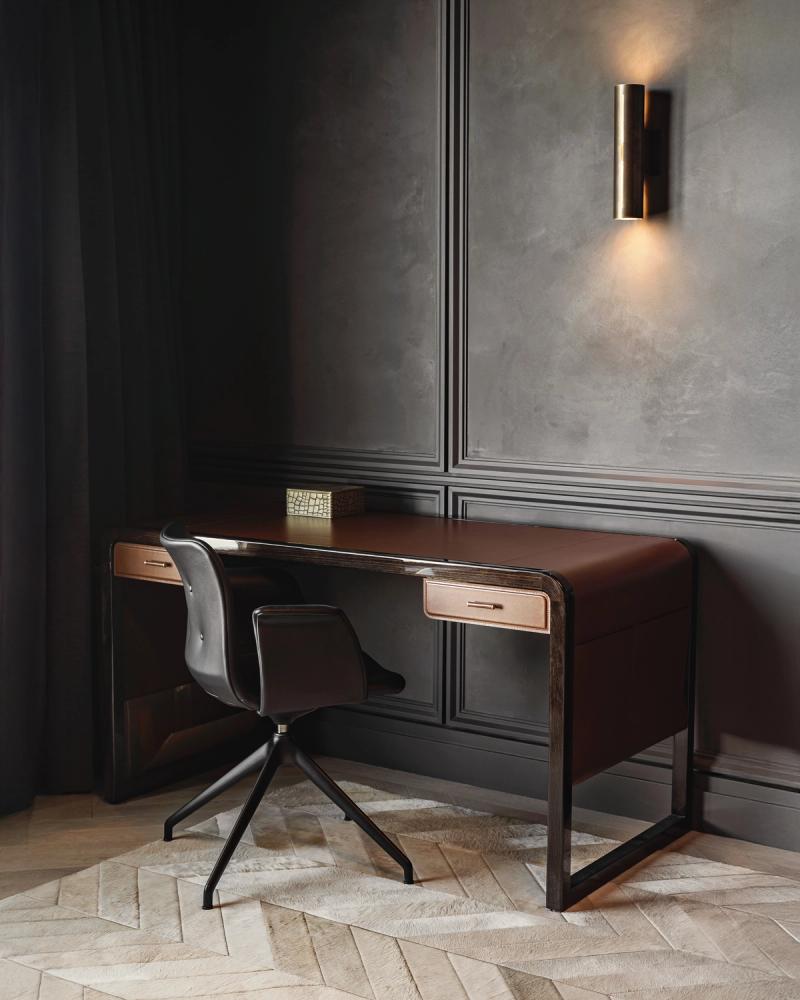
Signature Matte Plaster wall at Front project in New York City, NAINOA
What Venetian Plaster Actually Is
Venetian plaster is lime plaster: slaked lime and finely ground marble, tinted with pigment, applied in thin coats and burnished with a trowel until it takes on a sheen. The technique is centuries old and the material is mineral. There is no film sitting on the wall. The color and the light live in the plaster itself, which is why it reads differently as you move past it. But the word has drifted. In the trade, "Venetian" names the glassiest end of the plaster range. Among clients, and many designers, it has become a catch-all for any plaster with a glow. Kim, who founded Kamp Studios in 2004, now treats the word as the start of a conversation rather than a specification. Kim: “There are lots of different types of plaster. For years, what I assumed when someone said "Venetian" was high gloss, shiny. But so many designers use "Venetian plaster" as the terminology for plaster in general that I have follow-up questions now. "When you say Venetian, you obviously don't mean really shiny?" I did this to Noa.” Noa: “And I said yes.” Kim: “Noa was actually the first designer in probably a decade to request a traditional, high-gloss Venetian plaster. That was for the Front Street project. Aesthetically, the industry had moved toward softer, more understated plaster finishes, and I personally had embraced that shift. But, as with so many things in design, what falls out of favor eventually finds its way back.” The shine, it turns out, is not a different material. Every plaster Kamp applies is lime. What changes is the aggregate. Kim: “The plaster finishes we're discussing are all lime-based, including our traditional Venetian plaster. One of the key distinctions is the size of the aggregate. A very fine aggregate allows us to burnish the surface to an almost glass-like finish. At Meadowlark, we worked with a slightly coarser aggregate, which allowed us to achieve a beautiful, more understated sheen. It has a luminosity to it without being overly reflective.” Why it came back is a question about light as much as taste. Julianne: “Noa is really good at explaining to clients how it brings in the light. In a lot of Manhattan apartments the light doesn't reach all the way through the space. The reflection off a Signature Polish with a little wax carries it through and brightens everything, and it gives the room a little more height. The ceiling doesn't fall flat above you.” Noa: “What I like about plaster categorically is that it's a much more organic material. It has movement, a life and an energy to it that I find is lacking with paint. That's why we specify it as much as we do.”
"Now, when a designer asks for Venetian plaster, I find myself asking whether they actually mean a highly polished, almost glass-like finish."
Venetian Plaster vs Venetian Plaster Paint
Search for Venetian plaster and half the results are for "Venetian plaster paint": acrylic products, textured coatings, kits that promise the look with a roller and a trowel. They are a real category and a real question, and the difference comes down to where the finish comes from. Kim: “When I started Kamp in 2004 we were using a lot of those products that aren't lime. We didn't know any better. Now that I've used everything, I can say the products that aren't lime-based are less interesting. The lime-based products have minerals in them that actually create what you're seeing on the wall. With the other products you're using the trowel to make marks, to make it look a certain way, and that feels forced. We called them faux finishes back then, and they were literally fake finishes.” Kim: “I still get calls asking for a specific product by name, and I say, I'm sorry, I won't put my name on that anymore. Not to say it's bad. People still use them. But those are do-it-yourself products. Real lime plaster is something a professional should be applying, because it takes on a life of its own in the space. There's an inherent depth and character to natural lime plaster that I find incredibly difficult to replicate with a material that doesn't contain lime.” Limewash sits in a third category. It is lime, but thin. Kim: “The limewash I used to do is like watered-down paint. If you tried to wash it, it came off. You'd have to seal it for it to be durable.” Noa: “Budget allowing, we've shifted from limewash to plaster for exactly that reason. It isn't nearly as washable.” So when is the imitation the right call? Kim's own line is the useful one: the acrylic products are for do-it-yourself projects. If you aren't hiring a plasterer, they will get you closer to the look than paint will. If you are hiring one, the money belongs in the real material. Inside the studio, though, the alternative to real plaster is never fake plaster. It's paint, used honestly, in the rooms that don't need more. Julianne: “No one ever wants to switch to paint, so it's always plaster first. When we do switch, it's budget, or a secondary space you don't need to spend the money on. A staff room. The cellar. Those extra rooms.” Noa: “It's almost always budget. I want something that has movement, that has depth, and that goes for anything, not just wall finishes. Why would I choose a man-made finish over a natural one? There's always a je ne sais quoi when there are minerals in it, components that can't be manufactured. So paint is always a second choice. But I'm not spreading the butter evenly across the toast so that everything gets a thin film. I'd rather concentrate it on a couple of major bites. And then there are projects like Aspen where we get to lather the whole slice.”
Where Venetian Plaster Walls Work, and Where They Don't
Primary spaces first. The entry, the living room, the rooms you walk into. When the budget tightens, the cuts come from the back of the house, and both sides of the table agree on where. Kim: “It usually comes down to budget, and then it's always the same conversation: get the most bang for your buck. As soon as you walk in, you want the wow factor, whether it's for yourself or for friends. Everybody wants to feel good when they open the door. So don't plaster the back bedrooms if you're being conscious of budget. Most of the time we're doing the entire house. When there's a budget, we skip a couple of guest rooms, the laundry room.” Julianne: “Kids' rooms are a good example. At 76th Street the children are so young that the client wanted them to have the option, in five years, to paint the whole room blue or green without it being a big expense.” Kim: “Kids' rooms are the first thing I'd cut. When they're young it's a waste of money. They're going to want change, and it's going to get messed up. Make it easy on yourself and focus on the important spaces.” The reason the studio skips plaster most often, though, has nothing to do with money. Noa: “The most common non-budget reason we don't plaster a room is acoustics. In a lot of bedrooms we prefer wall covering because of how it absorbs sound. I like soft acoustics in a bedroom, and I like the transition from plastered main spaces into a bedroom with upholstered walls or wall covering. You can hear the difference as you walk in. It's an auditory turndown at the end of the day. Same with some offices. Sometimes we'll plaster the walls and put wall covering on the ceiling, so you get a rug's worth of acoustic control overhead.” Kim: “There is such a thing as acoustic plaster, but we don't use it. You have to be certified to apply it, and I've honestly never seen it in person. Through the grapevine, it's annoying to work with and it doesn't look great.”
"It has movement, a life and an energy to it that I find is lacking with paint."
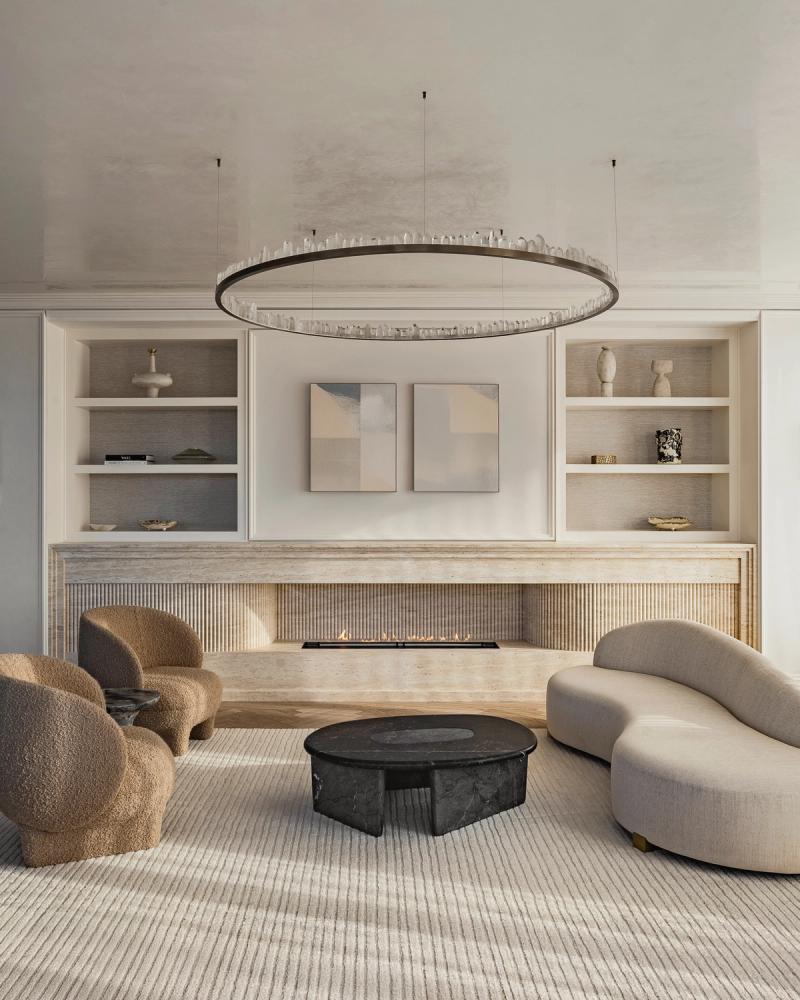
Signature Polished Plaster wall at Front project in New York City, NAINOA
Where Venetian Plaster Walls Work, and Where They Don't
Primary spaces first. The entry, the living room, the rooms you walk into. When the budget tightens, the cuts come from the back of the house, and both sides of the table agree on where. Kim: “It usually comes down to budget, and then it's always the same conversation: get the most bang for your buck. As soon as you walk in, you want the wow factor, whether it's for yourself or for friends. Everybody wants to feel good when they open the door. So don't plaster the back bedrooms if you're being conscious of budget. Most of the time we're doing the entire house. When there's a budget, we skip a couple of guest rooms, the laundry room.” Julianne: “Kids' rooms are a good example. At 76th Street the children are so young that the client wanted them to have the option, in five years, to paint the whole room blue or green without it being a big expense.” Kim: “Kids' rooms are the first thing I'd cut. When they're young it's a waste of money. They're going to want change, and it's going to get messed up. Make it easy on yourself and focus on the important spaces.” The reason the studio skips plaster most often, though, has nothing to do with money. Noa: “The most common non-budget reason we don't plaster a room is acoustics. In a lot of bedrooms we prefer wall covering because of how it absorbs sound. I like soft acoustics in a bedroom, and I like the transition from plastered main spaces into a bedroom with upholstered walls or wall covering. You can hear the difference as you walk in. It's an auditory turndown at the end of the day. Same with some offices. Sometimes we'll plaster the walls and put wall covering on the ceiling, so you get a rug's worth of acoustic control overhead.” Kim: “There is such a thing as acoustic plaster, but we don't use it. You have to be certified to apply it, and I've honestly never seen it in person. Through the grapevine, it's annoying to work with and it doesn't look great.”
"It has movement, a life and an energy to it that I find is lacking with paint."
Signature Polished Plaster wall at Front project in New York City, NAINOA
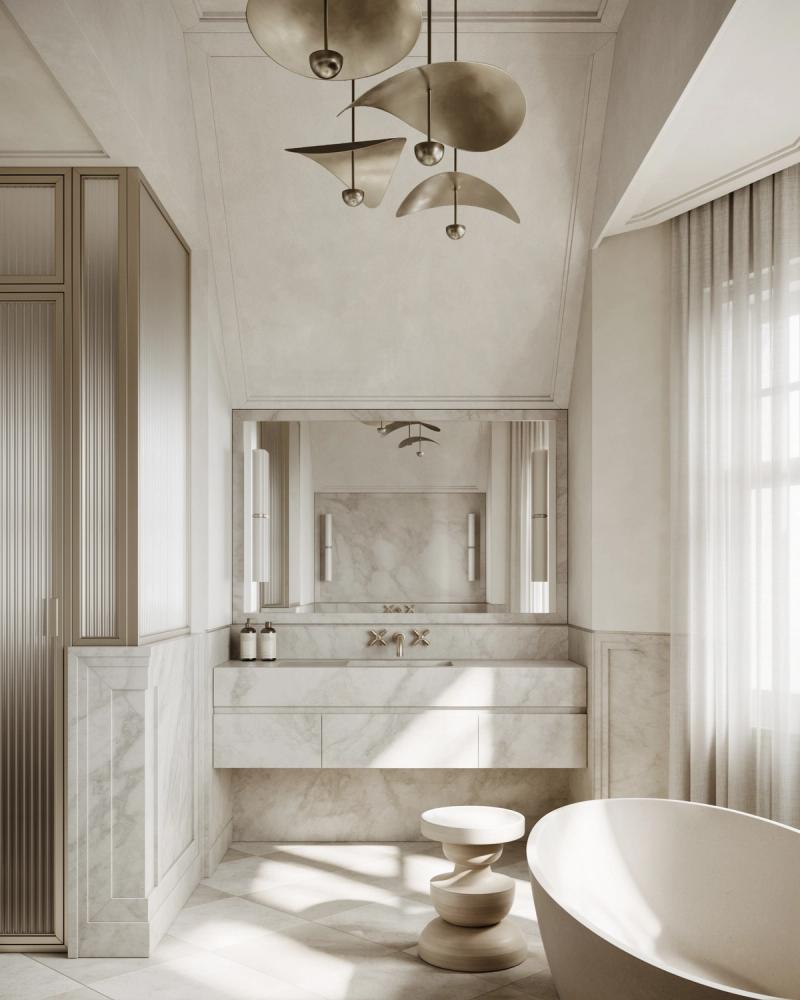
Signature Matte Plaster bathroom at Meadowlark project in The Hamptons, NAINOA
Venetian Plaster vs Tadelakt in the Shower
Then the question every homeowner asks: the bathroom. Kim: "While certain lime plasters, including our Signature Matte, can be used in wet environments under the appropriate conditions, I prefer to work with materials specifically formulated for that application. Tadelakt is probably the most widely recognized traditional plaster finish for showers, and we worked with it for many years. What we learned through experience is that it can develop fine hairline cracks over time. In traditional Moroccan architecture, these natural characteristics are often embraced as part of the material's inherent beauty. However, our clients tend to have very different expectations when it comes to the appearance and performance of their shower walls." Kim: "As a result, we evolved our approach. We now use a lime-cement-based plaster, essentially a microcement, specifically within the shower enclosure. Throughout the rest of the bathroom, we return to our traditional lime plasters. We can even continue those finishes onto the shower ceiling, provided the conditions are appropriate and it isn't a steam shower. It's really about selecting the right material for each environment while maintaining a cohesive aesthetic throughout the space." Noa: "That's why I rarely write tadelakt into a spec anymore. I call it microcement, microconcrete, Concretta. If the spec says tadelakt, it's going to have problems." For high-traffic rooms and houses full of children, the answer is a specific finish, and it has a specific origin. Kim: "For high traffic spaces and homes with children, our Signature Matte is an obvious choice because of its durability and ease of maintenance. Most everyday scuffs, even black marks left by the rubber sole of a shoe, can be removed with nothing more than a microfiber cloth and water. I sometimes feel like I'm doing an infomercial when I talk about it, but it really is that simple. Once we educate the homeowner or housekeeping staff on how to care for the finish, it's incredibly easy to maintain." Kim: "Our Signature Matte was actually born out of our work on the Apparatus showroom in Los Angeles. The space was designed with plaster in mind, with more than 10,000 square feet of wall surface. The challenge was to develop a finish that was not only beautiful but could withstand the demands of a commercial environment without requiring frequent touch ups. We spent six months developing, refining and testing different iterations before arriving at what is now our Signature Matte finish. Its performance was ultimately what set it apart. From there, the finish really developed a reputation of its own and quickly became one of our most requested finishes." Noa: "Is there something synthetic in it that makes it durable?" Kim: "It's a natural lime-based plaster formulated with mineral aggregates and a small amount of polymer additives that enhance its adhesion and durability. The plaster itself is zero VOC."
"There's an inherent depth and character to natural lime plaster that I find incredibly difficult to replicate with a material that doesn't contain lime."
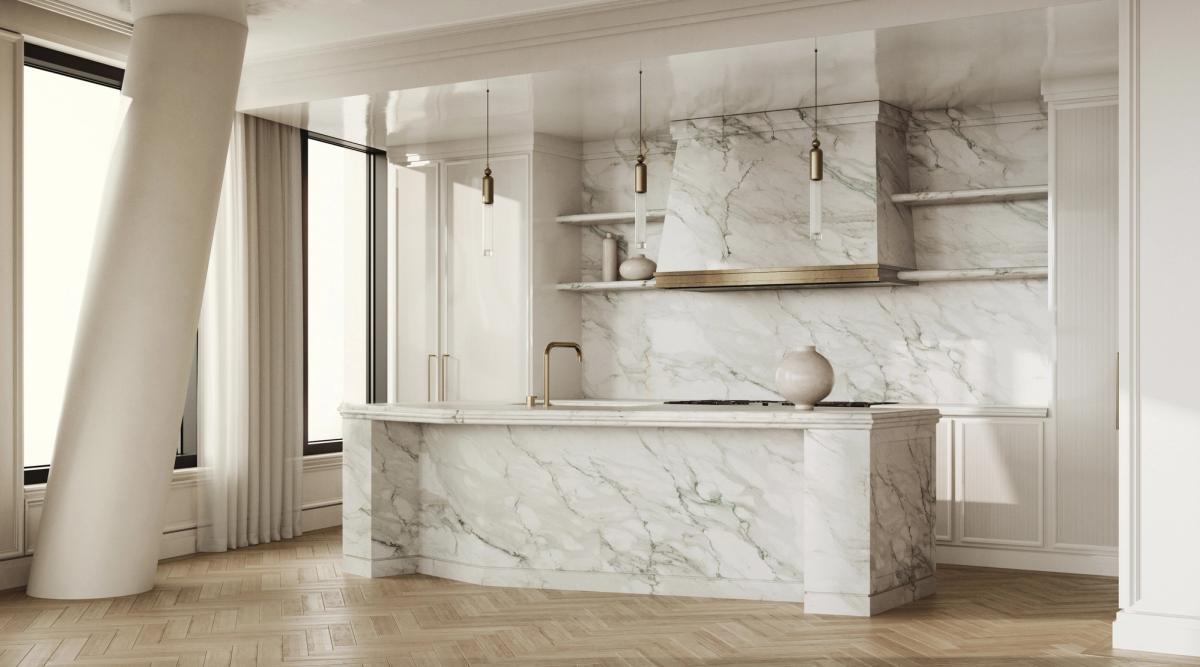
Signature Polished Plaster kitchen at Front project in New York City, NAINOA
Signature Polished Plaster kitchen at Front project in New York City, NAINOA
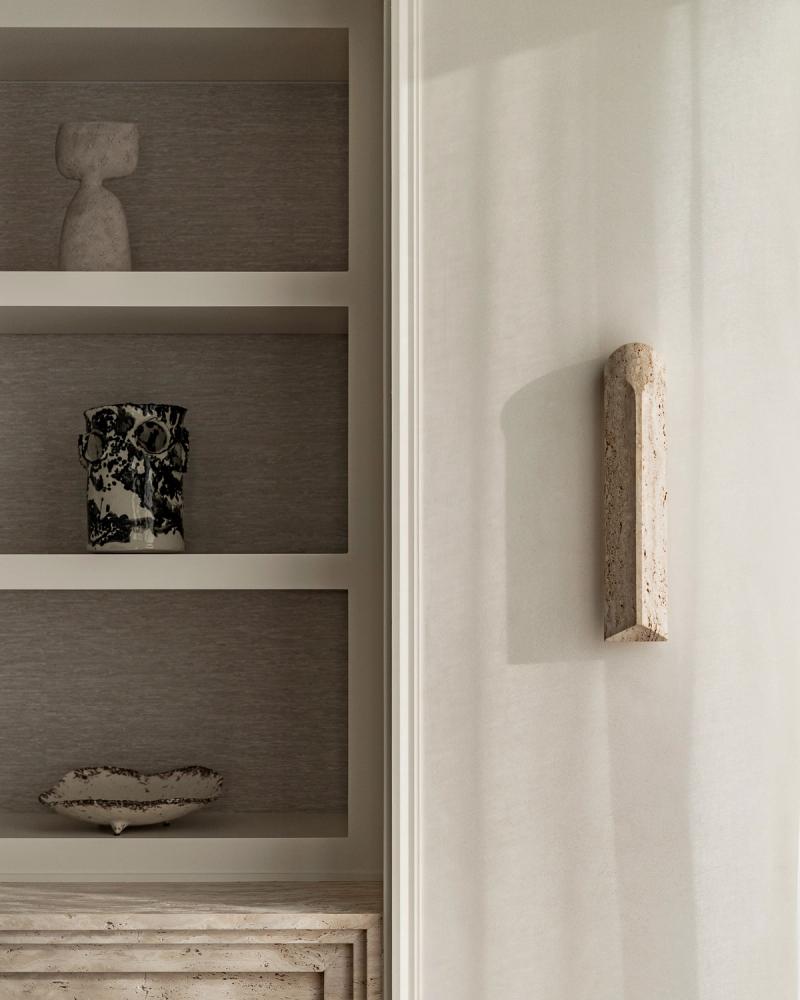
Signature Matte Plaster wall at Front project in New York City, NAINOA
Color, Sheen, and Getting the Sample Right
Most plaster disappointment starts at the sample. The sheen is chosen before the room's light is understood, or the color comes off a paint deck and the plaster, being a different material, disagrees. The studio's process starts with the sheen, and the sheen starts with the room. Noa: “I don't actually have many material preferences. My preference depends on what I'm trying to achieve in the space, what the rationale is. I usually prefer a matte or a Signature Polish over a high gloss, but it depends on the room. The matter you go, the softer it is, because it reflects less of what's around it: less glare, fewer spotting issues. Signature Polish is amazing when ceilings are lower. The darker the space and the higher the ceiling, the higher the gloss I'll go, because the more light you get back. In my own foyer in the Hamptons the ceiling is a piano finish, pure high gloss, because it isn't a bright space and I want a one-to-one reflection of the hand-painted mural that wraps the room. There's a particular reason for it.” Julianne: “At Meadowlark we started by talking about Venetian, because the clients also have a house in Miami. We decided that was more Miami glam. The Signature Polish samples reflected the light nicely but were still too far from the gloss they'd pictured, and what Kim did really well was add an extra layer of wax. It was a happy medium between matte and high gloss” Put together, the studio's sheen choices sort by room and light. Different plaster and paint finishes vary by sheen level, which determines where they perform best and how they interact with light and ceiling height: Matte (Signature Matte): Offers a flat sheen that reflects the least light—preventing glare or spotting under any lighting condition—making it the most cleanable option for high-traffic rooms, corridors, kitchens, and homes with young children. Signature Polish: Introduces a soft sheen well-suited for main living spaces and ceilings in apartments where daylight doesn't travel well; it works especially well on lower ceilings, carrying light through the room and keeping the ceiling from falling flat. Polish with wax: Provides a medium sheen for main rooms where standard polish reads too quiet and high gloss feels too glam (such as Meadowlark), giving rooms more light back without creating a mirror effect. High gloss (true Venetian, piano finish): Delivers a mirror-like sheen designed for dark rooms with tall ceilings—where the darker and taller the space, the higher the gloss should be—making it ideal for statement ceilings and foyers meant to reflect specific features like a mural. Then the color, which is where the sampling gets serious. Julianne: “It depends on the scale of the project. Meadowlark had one main color, Benjamin Moore's Seapearl, so we sampled a few versions of it in different finishes, and because it was a big house we did really large samples, which helped to hold up to the ceiling. 76th Street has many rooms in different colors, so we sampled a lot. Kim's standard sample is eight by twelve inches. Kim is sick of me, but I have such a good library now.” Julianne: “ It matters because we pick our colors off a Farrow & Ball or Benjamin Moore chip and ask for it in plaster, and the plaster version can run a little darker or lighter. Sometimes we redo it. It's about getting it perfect.” Kim: “Color can be one of the more nuanced aspects of working with lime plaster. Deeper, more saturated colors tend to be the most challenging because the amount of pigment required can alter the consistency of the material, making it more difficult to apply. Softer neutrals, creams and taupes tend to be much more forgiving. Unlike paint, plaster has an inherent depth and tonal variation that influences how we perceive color. A paint chip is a great starting point, but it's important to see that color translated into the actual plaster finish. That's why the sampling process is such an integral part of what we do” Even then, the schedule occasionally doesn't leave time to check. Kim: “On the 76th Street project, we were working within a particularly compressed construction schedule. The material for the living room went into production and onto the walls before I had the opportunity to personally verify the color. The finished plaster ended up being deeper than the original Benjamin Moore reference.” Kim: “Fortunately, Julianne loved the result! Had that not been the case, we absolutely would have redone it. We take a great deal of responsibility for delivering the designer's intended vision, and it's one of the reasons we place so much importance on the sampling and color approval process.” How many Venetian plaster colors a house needs is the other half of the discipline. Kim: “When we're working with a designer for the first time, I always encourage them to narrow their initial color selections to two or three before we begin sampling. It allows us to establish a direction and refine the palette from there. In many of the homes we work on, there's a predominant color that carries throughout the main living spaces, creating a beautiful sense of continuity. At 76th Street, for example, that color was Benjamin Moore's Seapearl. Bathrooms and more intimate or distinctive spaces often present an opportunity to introduce a different color or texture, where the plaster becomes more of a decorative wall treatment in its own right” Noa: “Aspen is twelve colors through the house. Pink in her bathroom, blue, plasters matched to the stone in every guest bath. But I can't pick the color for a two-million-dollar bathroom from a tiny Benjamin Moore swatch and call it a day. I need a sample to approve. I'm not confident enough as the designer to vouch for a color I've only seen as paint." Kim: “Without a designer directing it, it goes the other way. I had one client with fifty-two paint swatches on her wall. She FaceTimed me and said, I think I'm having a breakdown, I need you to come here and tell me what to do. We picked a color that day.”
"I'm not spreading the butter evenly across the toast so that everything gets a thin film. I'd rather concentrate it on a couple of major bites."
Understanding the Cost of Venetian Plaster
Kamp doesn't publish pricing. Every project is quoted on its scope, scale, architectural complexity and finish. What the studio will say is how the finishes rank against each other, and why. Kim: "The cost of plaster varies considerably depending on the finish, the scale of the project and the complexity of the architecture. Our Signature Matte is generally our most approachable finish, with pricing increasing as we move into polished and traditional high-gloss Venetian plaster, which require additional labor and refinement. Our specialty finishes, including sculptural plaster, bas-relief and metal, are in an entirely different category. These are highly bespoke installations that require a tremendous amount of artistry, technical expertise and time. Each of those projects is priced individually." Noa: "Like the metallic ceiling in the dining room at Surfside." Kim: "And the fireplace at Meadowlark." None of that is paint money, and the studio doesn't pretend otherwise. The argument for the budget line is what the wall does on its own. Noa: "People don't know what plaster costs. It's significantly more expensive than paint, so it has to be a real choice that people make. The way I talk about it with clients is that a plaster wall, in many cases, doesn't need anything. You don't have to decorate it or hang art on it. The wall can stand on its own. A painted wall frequently can't. A large painted surface with nothing on it needs something. So part of fitting plaster into a budget is what it saves you elsewhere." Kim: "It's also an awesome backdrop for art." Noa: "It is. But it doesn't require it."
Venetian Plaster Fireplaces
The monolithic plastered fireplace, where the surround, the chimney breast and sometimes the wall behind it read as one continuous material, is among the most requested applications of the finish and one of the most specialized. The rules start with heat. The material tolerates a fireplace. It does not tolerate everything. Kim: “There are limits with heat. We're not plastering inside a sauna. And we don't apply under fifty degrees either. That's problematic.” Around the firebox itself, the discipline is in the clearances and in what sits behind the plaster. Kim: “The most important things are proper clearances, a non-combustible substrate, and preparation for temperature changes. We never apply our material inside the firebox, and we typically stay about four inches away, depending on the fireplace specifications. We generally work over cement board or another approved substrate, with everything prepared so that heat expansion and contraction doesn't crack the finish. And we always coordinate with the contractor so the installation meets the fireplace manufacturer's requirements.” At Meadowlark, the fireplace sits in the specialty category alongside the Surfside ceiling, priced individually as all of Kamp's specialty work is: a titanium liquid-metal finish, worked by hand over a curved form. Kim: “The Meadowlark fireplace was finished in our titanium Liquid Metal alloy. What makes it so special is the curved architecture and the incredible amount of handwork involved. You can actually see the artist's hand in the movement, texture, and subtle variations of the metal. It has this beautiful sculptural quality that you could never achieve with a manufactured metal surface. That's what makes it extraordinary.”
"You can hear the difference as you walk in. It's an auditory turndown at the end of the day."
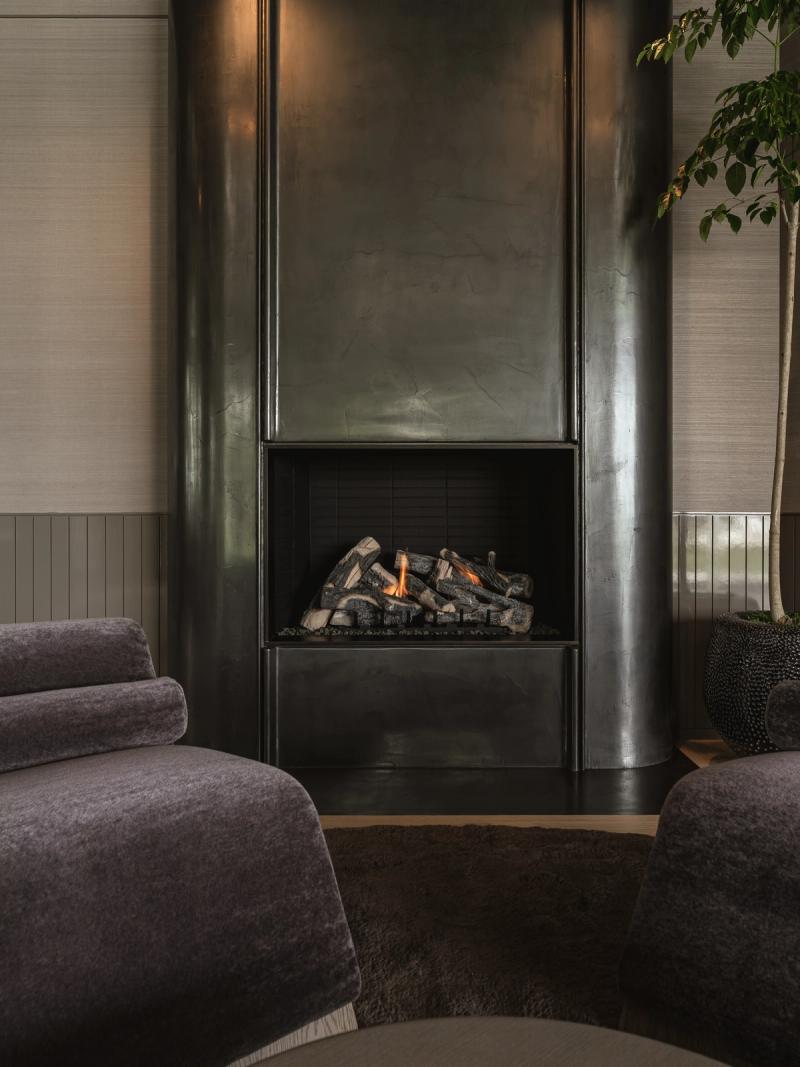
Titanium Metal Plaster fireplace at Meadowlark project in The Hamptons, NAINOA
Venetian Plaster Fireplaces
The monolithic plastered fireplace, where the surround, the chimney breast and sometimes the wall behind it read as one continuous material, is among the most requested applications of the finish and one of the most specialized. The rules start with heat. The material tolerates a fireplace. It does not tolerate everything. Kim: “There are limits with heat. We're not plastering inside a sauna. And we don't apply under fifty degrees either. That's problematic.” Around the firebox itself, the discipline is in the clearances and in what sits behind the plaster. Kim: “The most important things are proper clearances, a non-combustible substrate, and preparation for temperature changes. We never apply our material inside the firebox, and we typically stay about four inches away, depending on the fireplace specifications. We generally work over cement board or another approved substrate, with everything prepared so that heat expansion and contraction doesn't crack the finish. And we always coordinate with the contractor so the installation meets the fireplace manufacturer's requirements.” At Meadowlark, the fireplace sits in the specialty category alongside the Surfside ceiling, priced individually as all of Kamp's specialty work is: a titanium liquid-metal finish, worked by hand over a curved form. Kim: “The Meadowlark fireplace was finished in our titanium Liquid Metal alloy. What makes it so special is the curved architecture and the incredible amount of handwork involved. You can actually see the artist's hand in the movement, texture, and subtle variations of the metal. It has this beautiful sculptural quality that you could never achieve with a manufactured metal surface. That's what makes it extraordinary.”
"You can hear the difference as you walk in. It's an auditory turndown at the end of the day."
Titanium Metal Plaster fireplace at Meadowlark project in The Hamptons, NAINOA
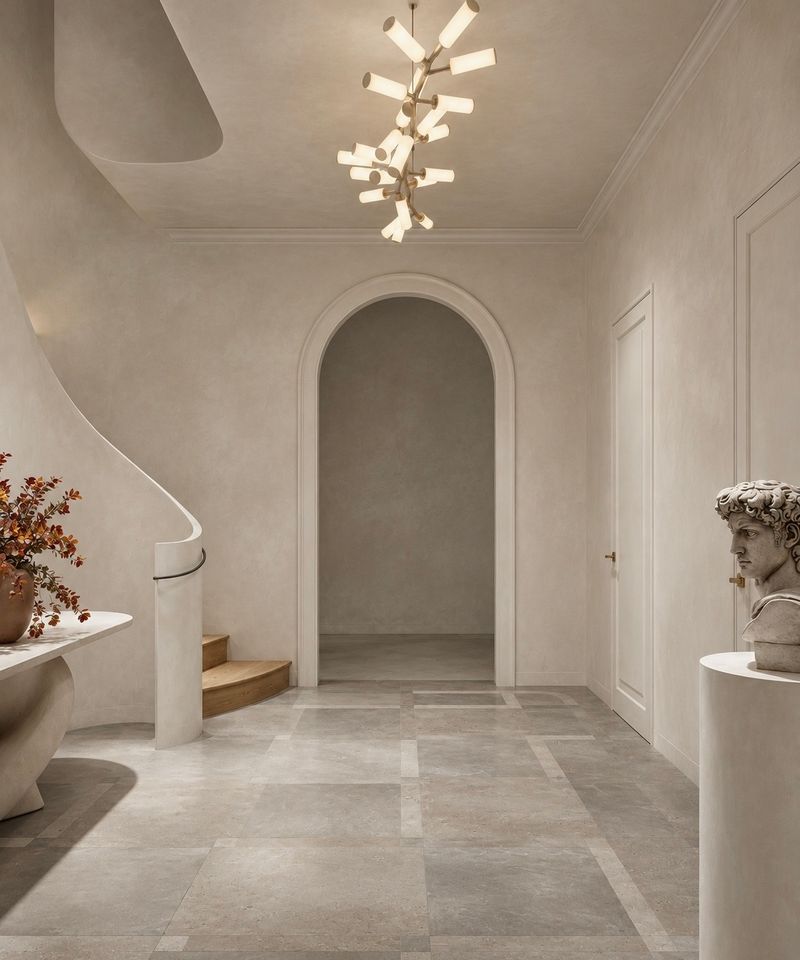
Signature Matte Plaster wall at 76th Street project, NAINOA
How It Ages, and How to Repair It
Plaster doesn't crack. Substrates do. And a crack is no longer a reason to redo a ceiling. Noa: "One thing we get asked about, and I usually defer to Kim on it, is cracking. I'd always heard that if a Venetian ceiling cracks, you have to redo the whole ceiling. You can't spot-treat it." Kim: "We absolutely do localized repairs. Early in my career, we would often have to refinish an entire surface, but over the past twenty-five years, we've developed and refined techniques that allow us to address even some of the most challenging repairs without having to redo an entire wall or ceiling. There's a tremendous amount of skill involved in recreating the movement, color and sheen of an existing plaster finish and seamlessly integrating a repair into the surrounding surface. It's something our senior artisans have become exceptionally skilled at over the years." Kim: "One of the biggest misconceptions about decorative plaster is that the material itself is inherently prone to cracking. In our experience, cracking is most often a result of movement or instability in the underlying substrate. If a drywall seam opens up or a building settles, that movement can telegraph through to the finished surface, much as it would with paint. That's why proper substrate preparation is so critical. When addressing a crack, it's equally important to identify and resolve the underlying issue before repairing the decorative finish itself." Noa: "Right. It isn't a precious material that moisture changes. You can use it in wet areas, in dry areas. Something else is moving." Day to day, the matte finishes clean with a cloth and water. The calls Kamp actually gets are for the marks water can't touch. Kim: "Anything oil-based is a repair, not a cleaning. Kids with crayons. We've gone in for that. But the day-to-day scuffs, the rubber from shoes, that all comes off with the microfiber rag." And then the question that comes up when a client tires of a color: can you just paint over it? Kim: "Technically, yes, but I would never recommend it. Venetian plaster is typically waxed or sealed, so painting requires sanding or special priming. More importantly, you lose the depth, movement, and luminosity that make it so beautiful. It ends up looking like something that was never meant to be painted. I would always recommend re-skimming or refinishing instead." Repairability is the quiet advantage Venetian plaster walls have over paint, where a patch rarely disappears into the wall around it.
"One of the biggest misconceptions about decorative plaster is that the material itself is inherently prone to cracking."
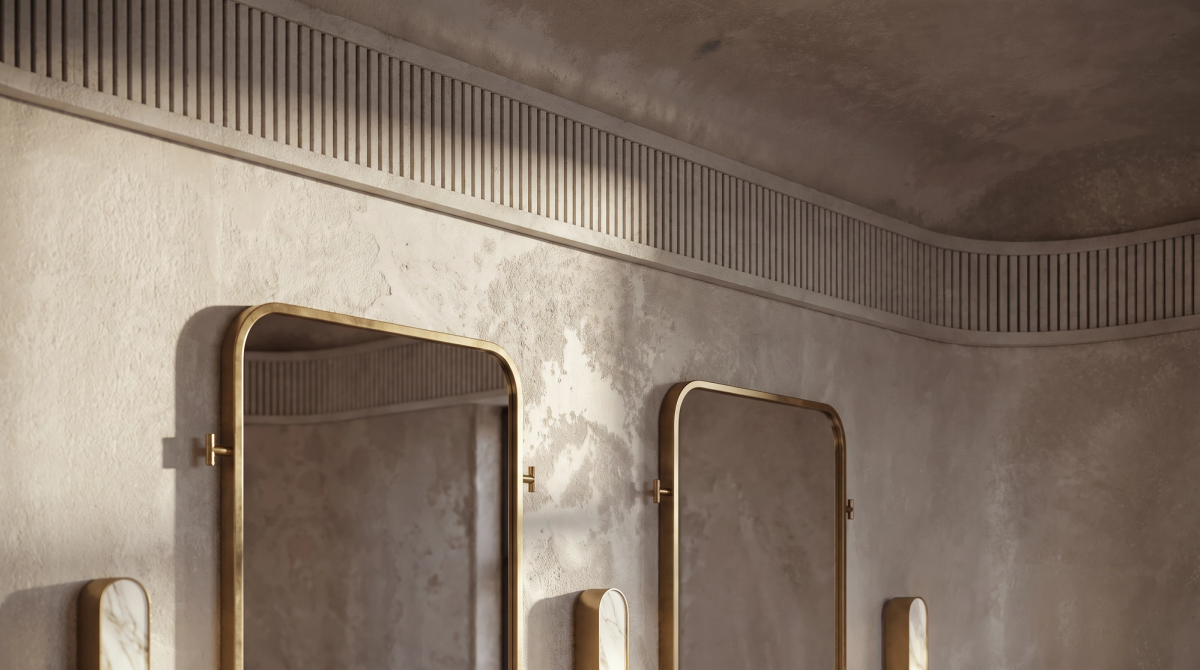
Polished Plaster ceIling at Espiritu project in Los Cabos, NAINOA
Polished Plaster ceIling at Espiritu project in Los Cabos, NAINOA
Plaster ceiling under construction at our Surfside project in The Hamptons, NAINOA
Finding and Briefing the Right Applicator
The finish is only as good as the hand applying it, and the hand is only as good as the brief. Kamp has worked through designers almost exclusively for years, by choice. Kim: “I'm more particular now about which jobs I say yes to and who I deal with. There are designers I've worked with for so many years that those are the hands I want to hold. Every repeat relationship, I want them to feel taken care of, not like we're just another trade. If somebody says, I need this by tomorrow morning, I'll get it to them. I'm not the only person who does this, so I want the people who use us to feel that.” Every material supplier on this page gets a mention; the one Kamp wanted named is its plaster manufacturer. Kim: “I want to plug Meoded, because they manufacture in California and I met them years ago. We'd never used them until the Apparatus showroom in LA, and they became our main source. Every plaster we do, we buy through them. We're one of their largest accounts, this little mom-and-pop operation that blew up one day, and if there's ever an issue we basically put out a bat signal. They take such good care of us.” Nobody in the room was asked to write a specification, but the conversation wrote most of one. From the designer's side, a brief that a studio like Kamp can act on contains: The sheen you actually mean, by name or by reference project, not the word "Venetian." Matte, polish, polish with wax, or true high gloss. A short list of colors, with the paint reference each one is matched to, and the expectation that the plaster version may read a shade off and will be sampled at 8 by 12 inches or larger before approval. Which rooms are plaster, which are paint, and which are wall covering, decided by light, traffic, acoustics and budget rather than by default. The right product for every wet zone, written as microcement or lime cement rather than tadelakt unless the client has seen tadelakt craze and wants it. The condition of the substrate, since every crack that appears later will be traced back to it.
"I can't pick the color for a two-million-dollar bathroom from a tiny Benjamin Moore swatch and call it a day."
Is Venetian Plaster Right for Your Project?
The framework that ran under the whole conversation is the one Noa applies to every material: the rationale first, the preference second. Noa: “My preferences highly depend on what I'm trying to achieve in a space. What is the logic behind the material choice? When there's a particular reason for it, that's always the strongest argument.” From this session, the logic sorts out like this. Light and ceiling height decide the sheen: the darker and taller the room, the higher the gloss; the lower the ceiling, the softer the polish. Budget decides the rooms, and the budget goes where you walk in first, not spread thin across the house. Acoustics decide the bedrooms, which often want wall covering instead. Children decide their own rooms, which want paint they can outgrow. Wet zones decide the product, which is a microcement inside the shower and ordinary plaster outside it. And if the plaster can't be real, the answer is honest paint rather than something pretending. Noa: “Why would I choose a man-made finish over a natural one? There's a je ne sais quoi that comes in with the minerals. But that doesn't mean we don't use paint. We concentrate.” That's the first conversation we have with clients who ask for Venetian plaster, and it's worth having with your designer and your plasterer in the same room before a single sample is made. If you're weighing it for a house of your own, start the conversation with us.
FAQ
Venetian plaster is a lime-based plaster, made from slaked lime and marble dust and tinted with pigment, applied in thin layers and burnished to a sheen. Strictly, the name refers to the high-gloss end of the range, where a very fine grain polishes up to a glass-like surface. In practice, designers now use "Venetian" loosely for any lime plaster with a glow, so a good applicator will ask what sheen you actually mean.
What is the difference between Venetian plaster and Venetian plaster paint?
True Venetian plaster is a mineral material. The depth and movement you see come from the lime and marble in it. "Venetian plaster paint" and similar acrylic products are coatings that imitate that look with trowel marks and texture. They cost less and suit do-it-yourself projects, but they don't clean, age or repair like lime, and up close they read as an imitation. If you're hiring a professional applicator, the money belongs in the real material.
How much does Venetian plaster cost?
In Kamp Studios' range, lime plaster finishes run roughly $25 to $55 per square foot installed, with the finish level, from matte to polish to wax, moving the number. Specialty finishes such as metallic, sculptural or bas-relief work start at around $300 per square foot. Plaster costs significantly more than paint, which is why designers concentrate it in primary spaces when budgets are tight.
Is Venetian plaster waterproof?
Standard Venetian plaster is not a waterproof finish and shouldn't be used inside a shower. For wet zones, specialists use a dedicated lime-cement or microcement product and keep conventional plaster for the rest of the bathroom, including a non-steam shower ceiling. Tadelakt, the traditional waterproof plaster, works but is designed to craze, which many clients don't accept.
Can you use Venetian plaster in a bathroom?
Yes. Bathrooms and powder rooms are among the most common places designers specify it, and they're where the color most often changes from the rest of the house. The one rule is the shower: inside it, use a wet-zone product such as microcement; outside it, standard plaster is fine. Keep conventional plaster out of steam showers and saunas.
How long does Venetian plaster last?
A lime plaster finish doesn't wear out the way paint does, because it's a mineral surface rather than a film. The cracks people associate with plaster come from the substrate moving, such as a drywall seam opening or a building settling, not from the plaster itself, and an experienced applicator can repair them in place. Day to day, a matte lime plaster cleans with a microfiber cloth and water.
Can Venetian plaster be repaired?
Yes. A skilled applicator can spot-repair cracks, gouges and oil-based stains without redoing the whole wall or ceiling. It's a question of technique rather than the material, and full redos, once standard, are now rare at experienced studios. Repairability is one of plaster's quiet advantages over paint, where a patch rarely disappears.
How do you clean Venetian plaster?
A matte lime plaster cleans with a microfiber cloth and water, which lifts everyday scuffs and even the black rubber from a shoe sole. Skip harsh cleaners; the surface is mineral, not a sealed film. Oil-based marks such as crayon won't wash out and need a spot repair by an applicator, which on lime plaster can be made to disappear.
Does tadelakt crack?
Yes, by design. Tadelakt is a traditional Moroccan lime plaster that develops fine cracks over time, and in Morocco that crazing is part of its character. Most clients don't want visible cracks in a shower, so specialists such as Kamp Studios now use a lime cement or microcement inside wet zones instead and keep conventional plaster for the rest of the room.
Can you paint over Venetian plaster?
Technically yes, but applicators don't recommend it. Venetian plaster is usually waxed or sealed, so paint needs sanding or a specialty primer to hold, and the finish is gone for good: the depth, movement and luminosity come from the burnished lime, and paint covers them with a flat film that looks like what it is. If the color or sheen is the problem, re-skimming or refinishing the plaster is the better route.